

The Numbers Don’t Lie
According to the Data and Marketing Association, email marketing delivers an average ROI of $42 for every dollar spent. While social media engagement continues to be important, Campaign Monitor reports that email open rates for travel companies average 22 to 25%—often significantly higher than the engagement you’re getting from your social media followings.
But here’s what matters even more: people on your email list are substantially more likely to book than social media followers.
You’ve probably experienced this yourself. Maybe you have a decent social media following on Instagram or TikTok, but how often does that actually lead to a booking? How reliably can you reach out and contact those people when you have a special offer, promotion, or upcoming deadline?
The Rising Cost Reality
Let’s address the elephant in the room. Paid digital advertising costs are higher than ever. WordStream reports that Facebook and Google ad costs have increased as much as 30 to 50% over the past two years. For multi-day operators selling higher-ticket experiences, you need multiple touchpoints before someone books, and email is the most cost-effective way to nurture those relationships over time.
Multi-day bookings take time. People plan, compare, and delay. We need lots of touchpoints, and the reality is our sales cycle is longer than the average day tour operator. Email is how you can stay in their world and build that trust and rapport over time.
Email Marketing and the VIP Method
Email marketing perfectly aligns with the VIP Marketing Method™. The “V” represents the value we need to deliver: inspirational, educational, and truly helpful content consistently. Email allows us to do exactly that.
The “I” stands for intimacy: that rapport that takes multiple touchpoints. This means showing up and showcasing your expertise, actually helping with something they’re struggling with, or guiding them through a complicated decision related to their booking.
The “P” highlights pervasiveness: we don’t want to rely on a single channel. We’re not saying email marketing only, but if you’re not using email marketing, this absolutely needs to be part of your strategy. Your ideal target guests are spending significant time in their inboxes.
Getting Started: The Lead Magnet Strategy
The million-dollar question: how do you start getting people onto your email list? One of the most effective approaches is creating a lead magnet—a valuable free resource, often a digital download, that you offer in exchange for someone’s email address.
It’s called a magnet because it should attract your ideal guests like a magnet attracts metal. The key word here is valuable. It needs to solve a real problem they have right now. Think painkiller, not vitamins; an urgent need that requires a solution, not something that’s just nice to have.
The offer should be irresistible to your ideal target guest, creating serious FOMO if they don’t download it before leaving the page.
Real-World Examples That Work
Peter from Mystical Asia Tours does outbound tours from Australia to Vietnam. On his website, he offers “Eight Costly Mistakes Aussies Make on Their First Vietnam Trip.” His landing page highlights benefits like “eight rookie mistakes that could cost you over $1,000 and countless hours of frustration” and “insider tips to save over 20% on accommodation, transportation, and activities.”
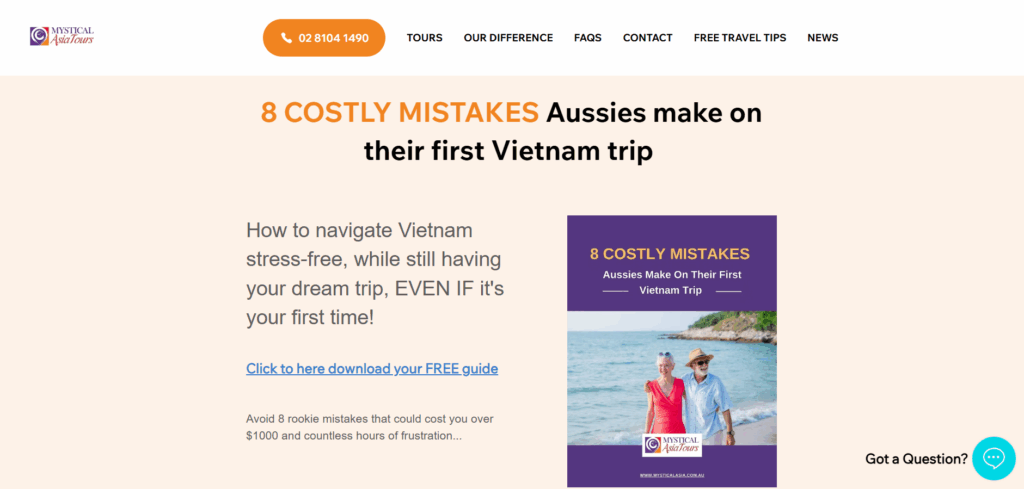
Notice that many travelers won’t be attracted to Peter’s lead magnet, and that’s a good thing. He’s making it irresistible to a very specific type of traveler: Australians doing their first trip to Vietnam. This approach qualifies leads effectively because we don’t just want to grow an email list for email’s sake; we want the right people on that list.
What Doesn’t Work
Generic newsletters rarely convert effectively. Those “sign up for information and special offers” approaches see significantly lower click-through and conversion rates compared to specific lead magnets.
Avoid overly generic travel tips or guides, and don’t create anything too dense or long. Often, shorter content works better—quick hit lists, checklists, or ultimate guides that aren’t entire eBooks.
Focus on the planning phase of the marketing funnel. This is where you’ll find specific pain points, challenges, or frustrations where you can provide a lead magnet that truly helps.
Leveraging Your Lead Magnet Everywhere
The real magic happens when you use your lead magnet across all channels. Put it on your Google My Business page, leverage it for Facebook bios and Instagram linktrees, share it in forums and Facebook groups, and use it in paid advertising.
Instead of driving traffic directly to tour sales pages where non-buyers disappear forever, drive people to your lead magnet first. You’ll capture their email address and won’t need to pay Facebook or Google every time you want to reach those people again.
The Welcome Sequence That Converts
Once someone joins your list, send them a welcome sequence—five to six emails that create a great first impression and proper introduction to your company.
Email one delivers the lead magnet with no pitch. Email two highlights a problem and positions your tours as the solution. Email three showcases social proof and testimonials. Email four handles objections head-on. Email five shows how you do things differently than competitors.
Email six brings it all together with one clear pitch.
Every email should have a call to action driving people to the next step in your sales funnel—whether that’s viewing tours, filling out a custom trip form, or scheduling a consultation.
Consistent Weekly Value
After the welcome sequence, send weekly email content at minimum. Continue delivering value, building intimacy, and maintaining that pervasive presence in their inboxes.
Track your email list growth as a leading metric. Start with a goal of 30 new subscribers per month, then work toward 50, then 100. This becomes a powerful foundation for all your other marketing strategies.
If you’re not doing email marketing as a multi-day tour operator, start now. You’ll have an asset you own, better conversion rates than social media, and a cost-effective way to nurture the longer sales cycles that come with higher-ticket experiences.